
Traditional rock salt is being widely replaced with liquid brine. While salt granules have kept roads and pavements safe throughout the years, liquid de-icing is becoming increasingly popular for several reasons. Some of these include more consistent coverage, reduced material waste, and faster activation. But an important thing to consider is the effect of liquid ice on various materials.
To keep concrete, pavement, and driveways safe, brine snow removal in Decatur should be performed by experts. Not only does this ensure better and more efficient results, but it also helps protect surfaces from potential damage. In today’s article, we’ll explore how brine salt reacts to various surfaces and why it’s best done by professionals. Read on!
Is salt brine a hazardous material?
Liquid salt is not flammable, reactive, or accurate toxic, which means that it’s typically not considered a hazardous material. However, it’s worth mentioning that exposure and incorrect methods can still irritate skin and eyes, corrode metals and equipment, and harm nearby plants. Which is why it’s important to avoid some common pitfalls of salt brine treatment.
Is road brine better than road salt?
That depends on the overall goal. Rock salt is frequently used on roads, large public spaces, and high-traffic areas where quick, widespread coverage is needed. The downside is that road salt uses more material, scatters around the surface, and poses a risk to landscaping and hardscaping.
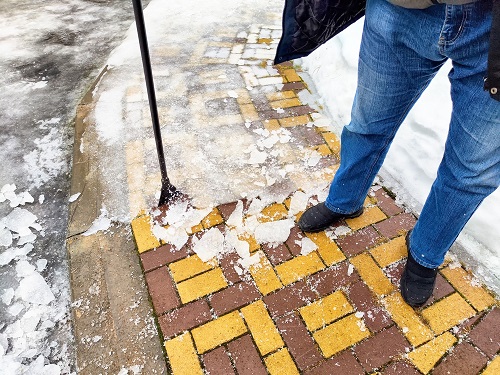
Liquid salt works best for homes and properties where you want to avoid the risk of salt granules getting inside and damaging flooring and furniture. On top of that, with careful planning and responsible treatment, it becomes considerably easier to protect hardscaping and landscaping from the potential damage of over-application, which is why many homeowners are opting for salt brine today.
In short, the advantages of liquid salt over granular salt include:
- Sticking to the pavement instead of bouncing off and making a mess.
- Faster activation time because it’s already in liquid form.
- Using considerably less salt than traditional granular salt
- Pre-treatment prevents ice from bonding in the first place
Is brine better for the environment?
Salt brine is considered a more environmentally friendly alternative to rock salt since it greatly reduces the amount of salt needed. Precise salt brine application helps minimize chloride runoff, which is widely considered one of the biggest environmental concerns when it comes to winter maintenance. On top of that, its liquid form prevents bouncing and scattering into surrounding vegetation, soil, and waterways, which can pose a risk to plant health.
Is salt brine safe on concrete?
Liquid salt is gentler on the concrete than rock salt, but not without its own set of risks. Since liquid de-icers use less salt, they reduce freeze-thaw cycles that lead to cracking and scaling. However, applying too much liquid salt can still cause the same problems that conventional rock salt would. For effective anti-icing and avoiding concrete deterioration, ice prevention treatment is something best left to professionals.
Who specializes in brine snow removal in Decatur, IL & beyond?
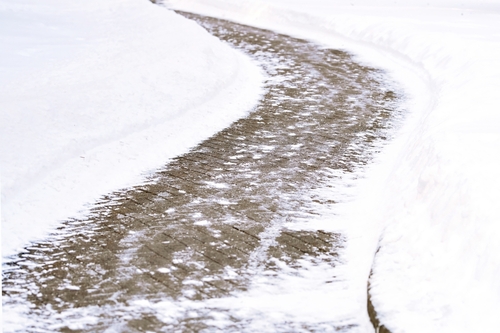
At Classy Grass, our technicians are trained, equipped, and prepared to apply brine solutions in a safe and timely manner, without putting various surfaces at risk. As the leading lawn care specialists in the area, we plan routes ahead, keep a track of weather conditions, and calibrate liquid rates for each material accordingly. The result is a precisely timed salt brine treatment, no excess waste, and safer walkways throughout the winter. Whether you’re located next to Staley Field or in any other part of Decatur, our responsive team will keep entrances and pavements free of ice, so that your day can pass without unpleasant surprises. Reach out today!